
Spotting Subterranean Termite Activity in Crawlspace Foundations
Crawlspaces provide the dark, humid environment subterranean termites crave. Learn how to inspect foundation walls, sill plates, and framing for early signs of an infestation before structural damage spreads.
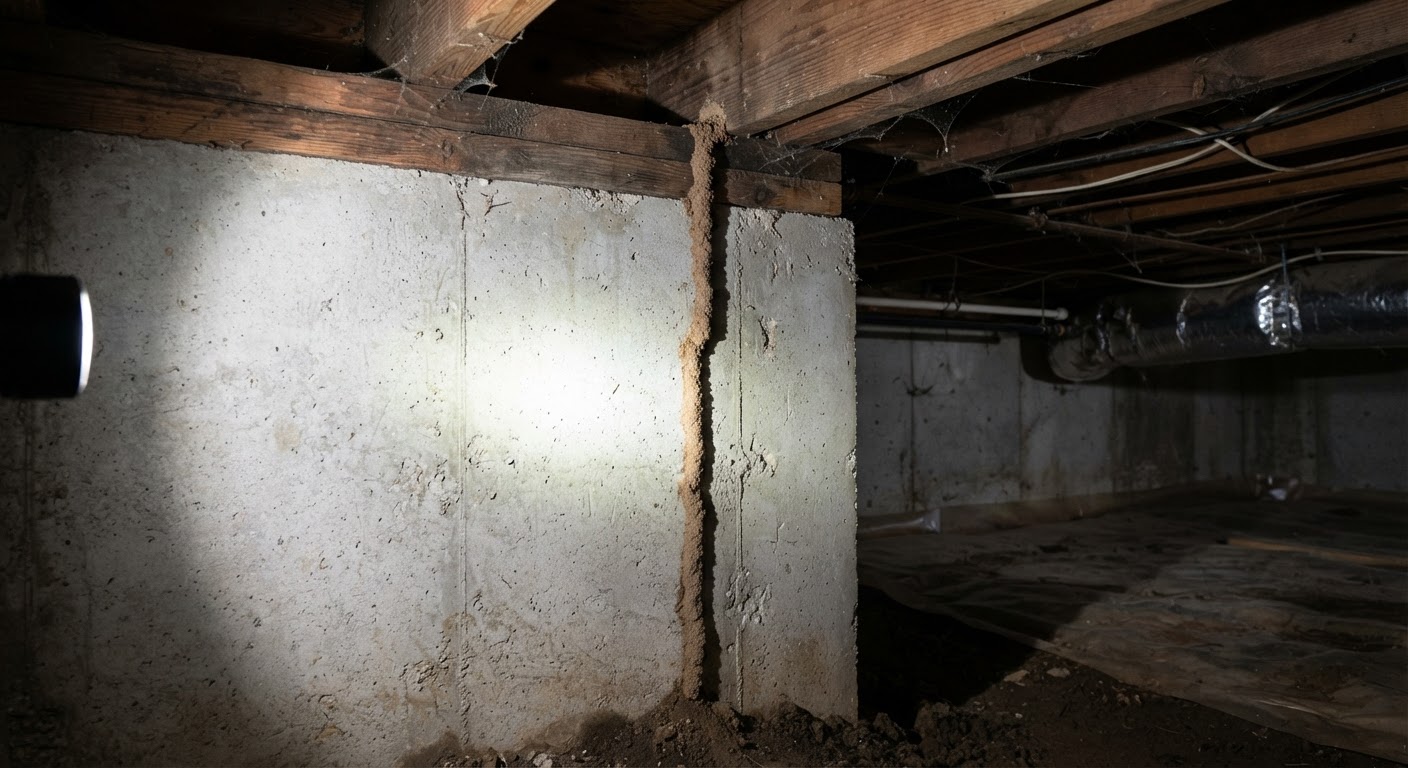
Why Crawlspaces Are Prime Real Estate for Subterranean Termites
For homeowners throughout Northwest Indiana, the foundation style of a house plays a massive role in pest vulnerability. Crawlspace foundations are exceptionally common, providing convenient access to plumbing, electrical runs, and ductwork. Unfortunately, the very features that define a crawlspace—sheltered darkness, proximity to damp soil, and direct contact with wooden structural framing—also make it the ultimate target for subterranean termites.
Unlike drywood termites that live entirely within sound timber, subterranean termites must maintain continuous contact with moisture, typically derived from the soil. In a crawlspace, the distance between the earth and the primary structural timbers of your home is often measured in inches rather than feet. Detecting an infestation in its earliest phases requires knowing where these pests enter, how they navigate masonry, and what subtle traces they leave behind before catastrophic structural failure occurs.
The Anatomy of Subterranean Termite Behavior
Subterranean termites live in organized underground colonies that can house hundreds of thousands of individual insects. Worker termites forage relentlessly around the clock, seeking cellulose, which is the foundational compound in wood, cardboard, paper, and plant matter.
Because these insects possess soft, thin cuticles, exposure to open air quickly desiccates and kills them. To travel across non-edible surfaces—such as poured concrete footers, cinder block foundations, or metal support jacks—they construct protective earthen highways known as shelter tubes. Understanding this biological necessity is your greatest advantage when conducting an inspection.
Crucial Warning Signs Inside Crawlspace Foundations
Inspecting a crawlspace can be physically demanding, but paying close attention to specific surfaces will help you identify an active infestation long before visible damage reaches your living spaces upstairs.
1. Mud Shelter Tubes Along Foundation Masonry
The single most definitive sign of subterranean termite presence is the mud tube. These tunnels are constructed from a blend of digested soil, saliva, and wood particles, appearing as thin, branching lines of packed earth. In crawlspaces, look for these distinct types of shelter tubes:
- Exploratory Tubes: Thin, branching paths that climb up concrete walls, piers, or plumbing pipes as foraging workers search for structural wood.
- Working Tubes: Wider, heavily traveled conduits typically measuring one-quarter to one-half inch in diameter, designed to transport hundreds of workers between the soil colony and the wood framing above.
- Drop or Free-Hanging Tubes: Stalactite-like formations hanging directly down from wooden joists or subflooring back toward the crawlspace dirt floor, built to create direct access routes.
If you encounter a mud tube, avoid scraping away large sections immediately. Breaking a small center section can determine whether it is active; if worker termites are present, they will quickly appear to repair the breach within a day or two. However, professional evaluation is strongly advised before disturbing significant portions of their foraging trails.
2. Damaged Sill Plates and Rim Joists
The sill plate is the horizontal piece of lumber anchored directly on top of the crawlspace foundation wall. Because it sits closest to the foundation surface, it is almost always the first framing element compromised by subterranean termites.
Subterranean termites feed on wood from the inside out, following the softer springwood rings and leaving the harder summerwood bands intact. This behavior creates a distinctive honeycomb or layered pattern inside the timber. Signs of damaged framing include:
- Hollow Acoustics: Tapping the wood firmly with the handle of a screwdriver produces a hollow, papery sound rather than a solid, resonant thud.
- Rippled or Blistered Wood Grain: The surface of the sill plate or rim joist may look slightly sunken, blistered, or darker than surrounding lumber.
- Resistance Loss: Gently pressing a flathead screwdriver against suspected areas causes the tool to sink into the wood with little effort, revealing hidden galleries packed with dried soil and debris.
3. Accumulation of Discarded Swarmer Wings
During the spring and early summer, mature subterranean termite colonies produce winged reproductive adults known as alates or swarmers. These individuals emerge in large numbers to mate and locate sites for new colonies. Once a brief flight concludes, the swarmers immediately shed their wings.
Because crawlspaces contain foundation vents, access hatches, and small crevices that admit faint outdoor light, swarmers are drawn toward these openings. Piles of translucent, uniform wings—typically measuring about a quarter of an inch long—clumping around crawlspace window wells, access doors, or on top of vapor barrier plastic indicate that a swarm recently took place nearby or directly beneath the home.
4. Soil and Frass Buildup in Framing Junctions
Unlike drywood termites, subterranean species do not produce cleanly carved pellet waste known as frass. Instead, they plaster their galleries with a mixture of soil and excrement to maintain humidity. If you observe dark, gritty matter packed tightly into the joints where joists meet the sill plate, between laminated beams, or along structural cracks in foundation blocks, it is often residue left by active termite excavation.
Secondary Interior Indicators Above the Crawlspace
Structural damage occurring in the crawlspace frequently telegraphs warning signs to the living quarters immediately above. Homeowners who observe the following symptoms should inspect the crawlspace foundation beneath the affected room:
- Spongy or Sagging Floors: When floor joists, subfloor sheathing, or support beams lose structural density, the finished floor above will noticeably flex or slope.
- Sticking Doors and Windows: Unexplained shifting in interior door frames or sticking window sashes can occur when sill plates settle under the weight of the structure.
- Pinholes in Drywall: Termite workers occasionally chew through the paper backing of drywall on lower walls, sealing the microscopic holes with tiny dabs of mud.
- Faint Clicking Sounds: When threatened, soldier termites strike their heads against wood gallery walls to signal alarms, producing a rhythmic, faint clicking sound audible in quiet rooms at night.
Environmental Crawlspace Factors That Attract Termites
Identifying early termite activity also involves recognizing structural conditions that encourage subterranean species to colonize the area in the first place:
- Wood-to-Earth Contact: Any untreated wooden framing, temporary support posts, exterior siding, or forgotten form boards touching bare soil provides an unobstructed highway for termites that bypasses foundation walls entirely.
- Excess Moisture and Inadequate Ventilation: Plumbing drips, poor downspout drainage around the perimeter, or inadequate cross-ventilation create the damp humidity levels subterranean termites need to thrive.
- Organic Debris: Scrap wood, cardboard boxes, fallen tree roots, or construction waste left on the crawlspace floor offer convenient secondary food reserves that draw colonies directly under the home.
Protecting Your Crawlspace with Brevix Pest Management
Subterranean termites cause billions of dollars in structural damage every year across the United States, and crawlspace foundations present some of the most complex treatment environments. Because the vast majority of their destructive work occurs out of sight inside load-bearing timbers, relying on surface observations alone can allow an infestation to progress unchecked.
If you have spotted mud tubes, hollow-sounding framing, or discarded wings in your crawlspace foundation, decisive intervention is vital. Brevix Pest Management provides targeted termite control and preventive pest control strategies throughout Munster, Indiana. Our comprehensive inspections identify the precise entry points, colony boundaries, and structural risks within your crawlspace, implementing proven barrier and elimination methods to secure your home. Contact Brevix Pest Management today to schedule a thorough crawlspace inspection.
Need help from Brevix Pest Management?
Contact our team to discuss your service needs in Munster and surrounding service areas.