
Managing Yellowjacket and Paper Wasp Nests Around Patios and Siding Safely
Learn how to differentiate paper wasps from yellowjackets, understand the risks of nesting behind siding, and discover safe, effective management strategies for your outdoor living spaces.
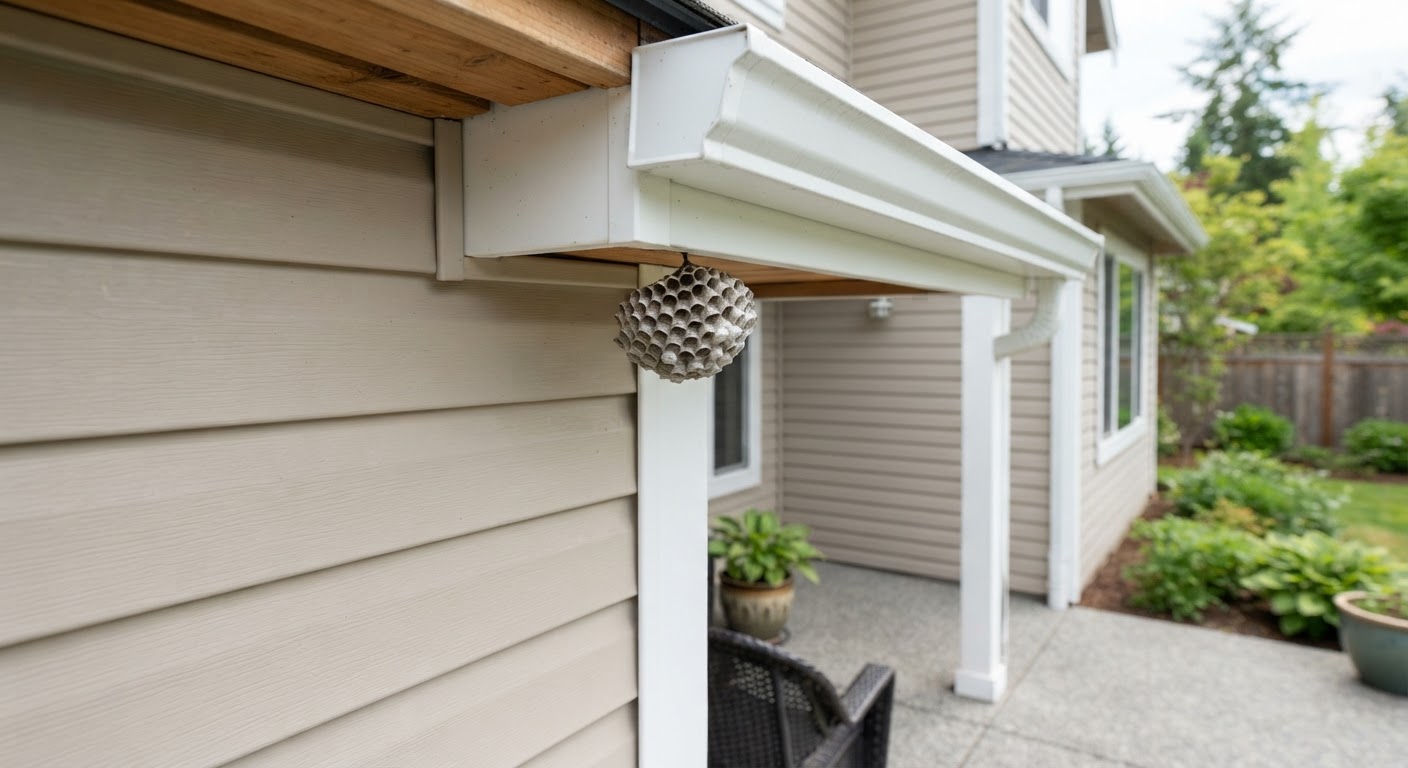
Outdoor living areas provide a comfortable retreat during the warm Midwest months, but they also offer prime habitat for stinging insects. In late spring and throughout the summer, homeowners across Northwest Indiana frequently discover active nests tucked under deck railings, beneath patio umbrellas, and inside the seams of home siding. While both paper wasps and yellowjackets belong to the same broader family of social wasps, their nesting behaviors, aggression levels, and the risks they pose to your household differ significantly.
Understanding how to recognize these insects, evaluate their nesting sites, and handle an infestation without triggering defensive swarming is essential for protecting your family and preserving your home.
Identifying Your Visitor: Paper Wasps vs. Yellowjackets
Before taking any action around your patio or exterior walls, you must know which species has claimed territory on your property. Confusing a mild paper wasp problem with an entrenched yellowjacket colony often leads to failed treatments and painful stings.
Paper Wasps
Paper wasps are typically slender with long legs that dangle noticeably during flight. Their bodies display combinations of brown, black, and yellow or reddish-orange markings. Key behavioral and physical characteristics include:
- Nest Architecture: Paper wasp nests resemble an open, inverted umbrella. The hexagonal brood cells are completely visible from below because the colony does not build a protective outer papery envelope.
- Common Locations: They favor sheltered, open-air spots such as porch ceilings, window frames, the underside of deck handrails, and patio light fixtures.
- Temperament: Generally moderately defensive. A paper wasp will defend its nest if you brush against it or disturb the structure directly, but they rarely attack unprovoked while foraging away from the comb.
Yellowjackets
Yellowjackets are stockier, faster fliers with shorter legs tucked tight against their bodies. They showcase bright, contrasting black and yellow patterns and are notorious for their aggressive defense mechanisms.
- Nest Architecture: Their nests are fully enclosed in a multi-layered, papery gray or tan shell with a single entry and exit hole at the bottom. Inside, multiple tiers of comb remain hidden from view.
- Common Locations: While some species build aerial nests in shrubs or trees, cavity-nesting yellowjackets frequently exploit structural gaps. They settle into voids behind vinyl or aluminum siding, hollow porch columns, and soffit crevices, as well as abandoned rodent burrows in the lawn.
- Temperament: Highly defensive and easily provoked. Yellowjackets respond vigorously to vibrations, loud noises (like lawnmowers), and perceived threats to their flight path. Furthermore, their smooth stingers do not detach, allowing a single insect to sting repeatedly while emitting alarm pheromones that summon nestmates.
The Concealed Hazard of Siding Nests
Discovering insects slipping behind your siding panels presents a much more complicated challenge than an exposed paper comb under a roof overhang. A steady stream of yellowjackets entering a small gap where siding meets trim, brickwork, or utility conduits indicates an established colony inside the wall void.
Attempting to seal this entry point while the nest is active is one of the most common and disastrous mistakes a homeowner can make. When the primary exit is blocked with caulk or expanding foam, thousands of worker insects do not simply perish inside; they look for an alternate escape route. In many cases, yellowjackets chew through fiberglass insulation, vapor barriers, and interior drywall, finding their way into living rooms, bedrooms, or kitchens.
Similarly, spraying standard store-bought aerosol sprays directly into a siding seam rarely eliminates the colony. These products often fail to reach the core comb where the queen resides, instead agitating the workers and forcing them deeper into the wall assembly or scattering them across the patio.
Safe Management Steps for Patio and Outdoor Living Spaces
Addressing stinging insects requires a calculated approach that prioritizes personal safety and prevents retaliatory attacks.
1. Conduct Daytime Observations from a Safe Distance
Locate the exact origin of the flight path. Stand at least ten to fifteen feet back and watch insect movement for several minutes. Determine whether the nest is fully exposed (typical for paper wasps) or concealed within a crack or fixture (typical for yellowjackets). Take note of whether the area experiences heavy foot traffic from children or pets.
2. Evaluate Nest Size and Maturity
In early spring, solitary queens establish small nests containing only a few hexagonal cells. These early starts are much simpler to manage. By mid-to-late summer, however, an unchecked yellowjacket nest can house thousands of aggressive workers, making any self-managed intervention hazardous.
3. Avoid Rapid Motion and Vibration
If you encounter a nest while moving patio furniture, opening an outdoor storage box, or cleaning siding, retreat smoothly and calmly. Swatting, flailing arms, or running abruptly triggers defensive pursuit. Wasps perceive sudden movement and vibration as an immediate threat to their brood.
Preventing Wasps from Reclaiming Your Exterior
Once active populations are resolved, structural and behavioral adjustments around your patio will discourage future queens from selecting your home as a nesting site in upcoming seasons.
- Seal Structural Seams During Dormant Periods: In late autumn or early spring, inspect your home's exterior envelope. Seal gaps around utility penetrations, repair loose siding panels, and ensure soffit vents are backed by intact fine-mesh screening.
- Maintain Patio Cleanliness: Late-season yellowjackets experience dietary shifts. Early in the summer, they seek protein to feed developing larvae; by late summer, their focus turns to carbohydrates and sugars. Keep outdoor trash receptacles fitted with tight lids, clean grill grease trays frequently, and avoid leaving open soda cans, juices, or fruit outdoors.
- Treat Weathered Wood: Paper wasps construct their papery pulp by scraping cellulose fibers from weathered, unpainted wood fences, decks, and outdoor furniture. Applying a fresh coat of paint, stain, or water sealant to exterior timber structures deprives them of building materials.
- Inspect Early and Often: Check under eaves, deck joists, and patio overhangs every two weeks during April and May. Removing tiny, queen-only starts early prevents expansive colonies from developing during peak summer months.
When to Seek Professional Intervention
While an early-season paper wasp comb on an accessible railing might be managed with caution, professional assistance is strongly recommended for:
- Any nest located inside structural cavities, including siding, brick weep holes, and rooflines.
- Aggressive yellowjacket colonies located near primary entry doors, walkways, or dining spaces.
- Large, active nests discovered late in the season.
- Households where any family member has a known allergy to insect stings.
Trained pest professionals utilize targeted applications, personal protective equipment, and specialized void-injection tools that eliminate the colony at its source without pushing insects into your living spaces or damaging building materials.
Protect Your Outdoor Living Space
Enjoying your patio shouldn't mean sharing space with defensive stinging insects. If yellowjackets have established a nest inside your siding or paper wasps have taken over your outdoor entertainment areas, Brevix Pest Management provides thorough, reliable wasp and bee removal services throughout Munster to keep your home safe and comfortable all season long.
Need help from Brevix Pest Management?
Contact our team to discuss your service needs in Munster and surrounding service areas.